10 Ways Enterprise Selling is changing for ISV’s – Evolving from direct, to channel, to the cloud era

10 Ways Enterprise Selling is changing for ISV’s – Evolving from direct, to channel, to the cloud era

As a student of our industry I have seen enterprise software selling evolve. IBM created this industry and became the gold standard for enterprise direct selling in the 70’s and 80’s. Many other great enterprise sales companies followed like Oracle, EMC, NetApp, Cisco and the like. But even pioneers like IBM learned that leverage was needed and that “controlling the customer” through account management was a myth!

This gave birth, In the 90’s, to companies like Compaq and Novell who developed channel models from the start and were quickly followed by Microsoft, Citrix, VMware and many other companies. In the early 2000’s the channel model evolved to a hybrid model with channel elements coupled with direct account management. Most enterprise software companies today are hybrid, but almost all “start-up” with direct sales. You can argue the pluses and minuses of channel and direct, but I am a leverage guy, and my favorite quote from my old friend, Mark Templeton, former CEO of Citrix, is “25,000 people wake up every day selling Citrix and none of them work for us”.

Enter the Cloud Era; So, what’s now different? As Enterprises migrate to the public cloud, the number of “true” public cloud players is small, with Amazon Web Services, Microsoft Azure and Google Cloud Platform being the runaway favorites. Because all cloud services, including the ISV’s are consumed through the customer’s tenant, the Cloud Service Provider “owns” the customer. You must rethink your selling model to take advantage of this additional leverage and align yourselves with partners who think and act in the cloud.

Below are 10 Ways Enterprise Selling is changing for ISV’s:

01. 

Who owns the customer?

Today the major public cloud vendors “own” the customers. Make no mistake about it, AWS, Microsoft Azure and Google Cloud Platform all “own” their customers and will be focused on programs that enable and retain this ownership. This isn’t a negative, but you must create and manage this as a leverage point.

02. 

Marketplaces

All cloud vendors have marketplaces that promote, resell, demo, transact and compensate ISV’s for selling “through the marketplace”. Customers purchase on their AWS, Azure, GCP accounts and the ISV gets paid by the cloud vendor. You are a 3rd party product being sold by the cloud platform to “their” customers. I do realize that they are also your customers, but you are not as strategic as the cloud vendor. Marketplace selling is a new artform and you must become a cloud marketplace expert if you are going to succeed in the cloud era.

03. 

Cloud Sellers

Cloud vendors compensate their sales teams who “co-sell” with ISV’s and other partners when the solution “lands” on their cloud platform. Most sales reps retire 10% of the Total Contract Value (TCV) against their quota which can be a big deal. You must now learn how to Cosell with AWS, Microsoft and GCP. This is an evolving model and will be difficult to master, so have patience and get expert help if you don’t have it in-house.

04. 

Partner to Partner Engagement

With the advent of mainstream cloud adoption, partner roles have changed. Cloud vendors have new technical, marketing and sales roles and responsibilities. Global and regional SI’s have stepped up and become cloud platform experts.

05. 

Sales, Marketing, and Technology

Sales, Marketing, and Technology are the trifecta of cloud platform support. Lean on the cloud vendors for technical, marketing and sales assistance. They have teams and infrastructure to assist you with migration, testing, marketing and positioning and selling in the cloud.

06. 

Cloud Platform Matters

The platform matters more now, and cloud vendors are aggressively competing for market share, and you must stay ahead of their development and aligned with their cloud native stack. Attend quarterly roadmap updates and leverage their resources to best align your technology with the evolving cloud platform.

07. 

Multi-Cloud Strategy

Almost every enterprise has a multi-cloud strategy and every ISV must evolve with them. Amazon Web Services (AWS), Microsoft Azure, and Google Cloud Platform (GCP) are the market leaders and have enough capital to compete with each other and have their areas of focus but other public clouds like Oracle, IBM, Alibaba, etc. offer products that might be a great fit for your solutions because of technology stack, co-selling requirements and regional access.

08. 

Don’t Forget Verticals

Not all public cloud vendors are created equally when it comes to verticals. For example, retailers may find it difficult to work with AWS because of the competition they see with its parent company. If you are Advertising and Marketing focused, GCP has a direct connection with the CMO in most enterprises because of Google Search. The top five verticals in cloud are Healthcare, Finance, Education, Automotive and Manufacturing, but this is an ever-changing landscape.

09. 

Messaging and Positioning

Messaging and positioning for customers is different than to partners and cloud vendors. ISV’s must have three sets of messaging and positioning:

  • Customer – This is your standard, what’s in it for the customer but you must be careful in a multi-cloud world to not bring another cloud vendor into one cloud vendors account, particularly if it’s a Cosell.
  • Cloud Vendor – What’s in it for the cloud vendors’ sellers from a customer value and sales commission perspective. How do they make money recommending your solution? How much drag do you have underlying cloud infrastructure?
  • Partner – What’s in it for the SI or Consulting Partner from an overall value perspective. How do they make money recommending your solution? How much drag do they receive by way of cloud services and reselling cloud infrastructure?

10. 

Think Globally

The public cloud marketplaces are global; you need to act global. My company supports customers in 29  countries because of the cloud vendor marketplaces. It’s large scale international leverage, take advantage.

The cloud era is a new and exciting chapter in our industry. If you aren’t on the cloud train, you will be missing out. The cloud business is growing at a faster rate by eating most on-premise solutions. With all disruption comes opportunity. Carpe Diem!
5 Tips for Maximizing Your Cloud Data

5 Tips for Maximizing Your Cloud Data

5 tips that every Enterprise technologist and business decision-maker should think about when they are managing and migrating data to the cloud.

What are you going to do when you can no longer afford your data? The data explosion is upon us! More data is created every two years than in all of history before and there is no sign of this slowing. Even a global pandemic didn’t slow down data creation, it accelerated it!

Enterprises struggle to balance two normally opposing things:

  • How can I get the maximum performance from my data to meet the demands of my customers, partners, and employees?
  • How can I get the best possible cloud economics because my data, not my budget is doubling every two years?

Below are five tips that every Enterprise technologist and business decision-maker should think about.

5 Tips for Maximizing Your Cloud Data

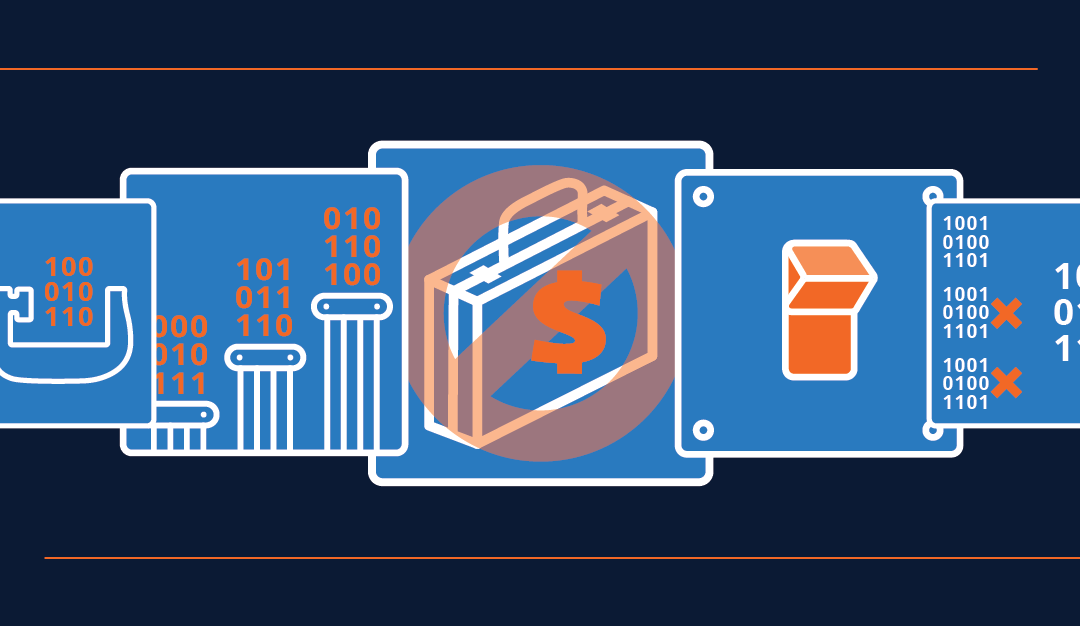
Compress your Data

Compress your data as much as possible, it will save you money. Compressed data takes up less space and requires less time and network bandwidth to transfer. Efficient compression cuts storage costs and high-performance compression can improve communication efficiency―providing a better customer experience.

DeDupe your Data

Duplicate data double and triple your data costs. Deduplication eliminates redundant data, reducing the size of the dataset. Deduplication with cloud storage reduces the storage requirements, along with the amount of data to be transferred over the network, resulting in faster and more efficient data operations.

Tier your Data

Not all Data is created equally. Put your hot data on the expensive and super-fast flash disks and your warm data on medium performance disks and your cold data on cold, less expensive cloud storage. Tiered storage infrastructures enable enterprises to effectively improve performance and enhance the cost-effectiveness of their cloud storage system and make the most of their available storage resources.

Don’t forget about HA – High Availability

When you absolutely, positively need access to your data, please turn on HA! Today there are several ways to create a HA solution for your data. Enterprises must balance cost against how many 9’s of availability. Baseline HA is the most efficient but will only get you 3 9’s of availability or 8.77 hours per year of unplanned downtime. Cross Zone and cross region HA gives you the best possible solution at 5 9’s of availability or 5.2 mins per year of downtime, with added cost but can guarantee you have your data available when a zone or a region of the public cloud goes down, and they do go down. By applying a high availability strategy, you can serve your customers through thick and thin. You send a message that you value their business. A highly available infrastructure also mitigates the negative impact of outages to revenue and productivity, which can cost hundreds of thousands of dollars per hour of downtime.

Stop Paying a Storage Tax

Pay the premium for your data performance and don’t pay an additional storage tax.

The concept of cloud storage was based on traditional storage vendor pricing and ideals. The more data you move to the cloud the more you pay. This will always be the case for the underlying disks, but shouldn’t be the case for your file system. If you have a large amount of data and performance isn’t an issue, pay less, but if performance is a deciding factor, pay more, and if it depends on the data, then tier your data. Either way you can save 20-80% on your overall cloud storage costs by following the practices outlines in the blog.

The I’s have it! – Why Buurst has embedded U’s

The I’s have it! – Why Buurst has embedded U’s

I have been involved with branded or named companies in every decade since the 1980’s and can tell you that naming has become exponentially more difficult over the decades! We now live in a world where people and businesses squat on domains hoping for a payday and an industry has been created selling and reselling these domain names. We also live in a world where SEO is closely tied to owning the dot com version of your company name, so .io, .cloud, .biz just doesn’t cut it. All the good names are taken….or so it sometimes appears!

 When we set out to rename and reposition SoftNAS we sought a name that best reflected our vision for the company as a data performance company, we wanted a descriptive name that talked to the explosion in data in the cloud. We looked at hundreds of names from made up names, to compound words to misspelled names and we found Buurst, spelled with two U’s and many people’s first reaction might be why choose a name misspelled with two U’s?

Why does this matter? Something I learned very early in life was taught to me by Lee Iacocca, an American automobile executive best known for the development of Ford Mustang, while at the Ford Motor Company in the 1960s, and for reviving the Chrysler Corporation as its CEO during the 1980s. I met Lee at a conference and he told the story about how he named the Mustang. He didn’t seek a name that everyone liked, he knew that a familiar name that half the people loved and half the people didn’t meant that everyone would be talking about it and the name would stick. I believe the Ford Mustang name still in use 50 years later was a genius move!

My CMO, Alex Rublowsky and I thought that this was opportunity for something special. Earlier in my career, I spent 13 years at Citrix whose name and logo was defined by duplicate letters in the name. The name Citrix worked, in part, because of the two I’s. The two I’s stand out when it is typed, but truly punched when you oppose the I’s in the Citrix logo.

We saw this as the inspiration for the embedded U’s in the Buurst logo. The two U’s make Buurst interesting, but the embedded U’s in the logo make it Buurst!

There are many things about Buurst that remind me of the exciting earlier days at Citrix….We are betting on the same trajectory! Those in favor say “I”. 

SoftNAS® Multi-Protocol Support

SoftNAS® Multi-Protocol Support

Your datacenter NAS supports multiple client protocols, and we believe your cloud NAS should do the same. However, choosing the appropriate protocol will increase your performance.

Whether your applications are already in the cloud or you are still migrating to the cloud, you are likely supporting many operating systems and many workloads. SoftNAS delivers the broadest range of client protocols of any cloud NAS vendor by supporting NFS, CIFS, AFP, and iSCSI. Windows supports native CIFS, iSCSI, and POSIX support NFS. Likewise, Linux supports native NFS, iSCSI, and with an add-on CIFS.

The question is when to use what protocol for client and workload?

SoftNAS allows you to share storage as a Unified Filesystem (NFS and/or CIFS) or as a Block Device (iSCSI LUN).


NFS and CIFS Support

SoftNAS supports NFS and CIFS share for the same volume, which is a unified filesystem. Native protocols for both Windows and Linux clients allow access and update to the same files while preventing conflicts by providing unified file sharing and file locking.

Most data that resides on file shares is unstructured. NFS and CIFS volumes can use SoftNAS file-level optimizations such as compression, deduplication, and tiering. These optimization capabilities together can reduce the cloud block storage requirements and cost by 80%.

We were looking for a solution that could scale-up and was easy to deploy and use. SoftNAS Cloud has proved to be flexible and incorporates CIFS support along with other features that allow us to focus on our core business.


– Reza Kertadjaja, Chief Operating Officer IndonesianCloud

NFS and CIFS support clients and servers and are the preferred protocol for clients who need off-cloud access. For those who use Apple Mac in workgroups, AFP protocol is also available.

iSCSI Support

For block-level data transport, SoftNAS supports iSCSI. iSCSI is one of the more popular communications protocols in use today and is native in both Windows and Linux. For Windows, iSCSI also provides the advantage of looking like a local disk drive for applications that require use of local drive letters; e.g., SQL Server snapshots and HA clustered shared volumes.

For Windows and Linux servers that need dedicated connectivity with consistent speed for the most demanding workloads, SoftNAS recommends iSCSI.

With iSCSI server workloads such as file services, SoftNAS recommends deduplication and compression. However, with workloads such as SQL or NoSQL SoftNAS recommends disabling deduplication due to unnecessary overhead.

FTP and SFTP Support

Because SoftNAS is built upon a standard Linux operating system foundation, it also supports common file transfer protocols, such as FTP and SFTP. For certain use cases, these ubiquitous file transfer protocols can be advantageous.

Conclusion

With the broadest protocol support (NFS, CIFS, AFP, and iSCSI) and unified cloud storage in the industry, SoftNAS supports native protocols to clients for both SQL and unstructured data for even the most demanding workloads.

A letter from our CEO and President

A letter from our CEO and President

Backed by our strong customer success, SoftNAS is now evolving further to smash the rules of cloud storage, dramatically changing the cloud storage business. SoftNAS is now Buurst – and it’s disrupting the cloud storage industry, and your data is going to be amazing in the cloud.

Storage vendors want to sell you more storage, but here at Buurst, our only motivation is to provide your business better application performance, lower cloud storage costs, and the control and availability you need unlock new opportunities to enable success for your business.

SoftNAS was born from an unmet need for enterprise-grade NAS software to be available to cloud computing and virtual computing customers. As our flagship CloudNAS product, Softnas has hundreds of happy enterprise customers, who all had the same problem: How do I migrate my data to the cloud and get the best performance at the best possible price? At Buurst we are customer first and truly excited serve you. These core values have guided us with everything we have done up to this point and will help us continue to do so as we evolve. We will continue to think about your data differently. We are honored for you to join us on this journey, and to learn how we can help your company achieve its goals. We are and will always be here for you and encourage you to reach out to us with any questions and feedback.

Our executive leadership team, alongside our employees, are here to serve you. Please check out our profiles to get familiar with us:</p

  • Rick Braddy, Founder & CTO

  • Alex Rublowsky, CMO

  • Krupa Amalani CFO

  • Vic Mahadevan Chairman, Board of Directors

  • Marc Palombo, CRO

Together, let’s be amazing and smash the rules of cloud storage!

Sincerely,
Garry Olah, President & CEO

SoftNAS Changes Name to Buurst, Announces Plan to Disrupt the Storage Industry

SoftNAS Changes Name to Buurst, Announces Plan to Disrupt the Storage Industry

The cloud data performance company secures $5 million in additional funding

SoftNAS, a leading enterprise-class data performance company, today announced significant changes to its strategic vision and business model, which are aimed at disrupting the cloud storage industry. To amplify these important changes and its breadth of cloud-native solutions, the company will now be known as Buurst.

Buurst recognizes the current model of charging organizations an additional storage fee is not relevant to the cloud and doesn’t position its customers for long-term success. Modern cloud customers require access to data with higher levels of performance and control. Moving forward, Buurst will provide value by delivering data performance, without charging customers a second time for the volume of data they store in the cloud. Cloud service vendors have traditionally charged customers by the gigabyte, terabyte or petabyte of data, however, with its new model, Buurst rejects this approach.

“The traditional model for cloud computing is evolving, and Buurst’s new approach is an example of companies creating inventive models that address organizations’ storage needs. Cloud data platforms and applications have an opportunity to rethink and change IT with innovative pricing models,” said Scott Sinclair, senior analyst, ESG Global. “Offering a more cost-effective way to leverage the cloud long term will be very appealing to customers.”

As an endorsement of this strategy, the company announced $5 million additional capital from its investor base. The additional financing brings the company’s total equity capital raised to $35 million and will be used to scale the growth of Buurst’s business.

“Our customers’ data is growing exponentially and the current approach to data storage means their costs will soon eclipse their entire IT budget,” stated Garry Olah, CEO of Buurst. “We service hundreds of enterprise customers who are turning to us to find a more cost-effective approach to data management in the cloud. We are making it easier and cheaper for our customers to bring all of their data to the cloud.”

Buurst is dedicated to delivering new levels of data performance, control and availability to position businesses to move, access and leverage data quickly. Recently, Buurst reached 1 million IOPS per second, an unprecedented level of performance in the cloud. This capability combined with a patented cross-zone, high-availability with a 99.999 percent uptime guarantee gives customers true choice for their data in the cloud. SoftNAS will remain a core product offering from Buurst and is available on both AWS Marketplace and Azure Marketplace.

“The cloud computing market is forecasted to total more than $250 billion in 2020, which illustrates a tremendous opportunity,” explained Vic Mahadevan, chairman of the Buurst board of directors. “Additionally, recent global events have highlighted the importance of reliable access to data and the need for exceptional data performance. Buurst’s advanced offering and strategic approach differentiates the company from other data solution providers. This completes the transition of Buurst from a storage company to a data performance company.”

For more information about Buurst’s revolutionary strategy and solutions, register to attend the company’s virtual launch event on Wed., April 15 at 11 a.m. PT. Visit this website to register: https://bit.ly/2yFPh95

About Buurst

Buurst, Inc. is a leading enterprise-class data performance company that delivers migration, cost management, and control of data in the cloud customers need. Buurst optimizes cloud storage decisions for organizations, from migration to granular monitoring and management to storage tiering for cost performance, across all major cloud platforms, ensuring superior performance and optimization of business-critical data. Buurst has offices in Seattle and Houston and employees located across the globe. Buurst powers some of the largest enterprises, including Samsung, Halliburton, T-Mobile, Boeing, Netflix, L’Oréal and WWE. For more information, visit www.buurst.com